Basement Flooding Cleanup in Arvada, CO
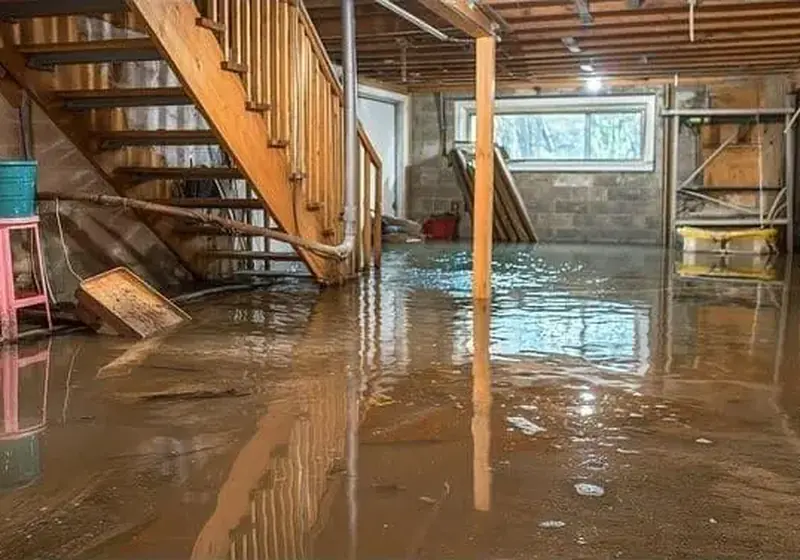
A flooded finished basement is the most common water loss in Arvada. The restoration team pumps it out, opens only what has to come out, and dries the framing and slab to a verified reading.
(888) 532-8620Water in the basement? Call now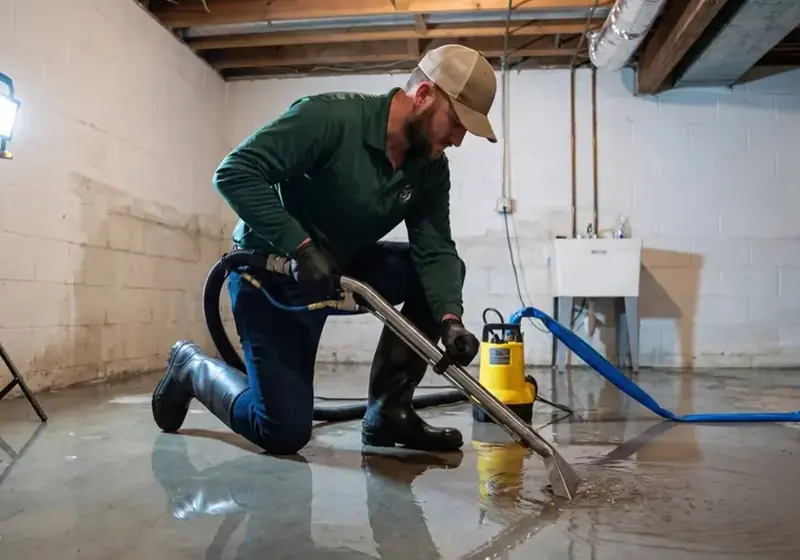
What to do when the basement floods
- Do not walk into water that reaches outlets, cords or the furnace.
- If the panel is upstairs and dry, switch off basement circuits at the breaker.
- Find the source if it is safe: a pipe, the water heater, the sump pit or a window well.
- Photograph the water line on the walls before anything is moved.
- Carry boxes, rugs and electronics upstairs, then call for a pump-out.
What does basement flooding cleanup cost in Arvada, CO?
In Arvada, CO, basement flooding cleanup typically runs $1,500 to $10,000. The range depends on whether the basement is finished, how many square feet are wet, the water category and how soon the pump-out and drying began.
For a closer planning number, run the water damage cost calculator. The restoration contractor who responds prices the job after the walkthrough and the moisture map.
How basement flooding cleanup is handled in Arvada
- Step 1
Stop and pump out
The crew confirms the source is stopped, then pumps and extracts standing water from the slab and carpet.
- Step 2
Map and open walls
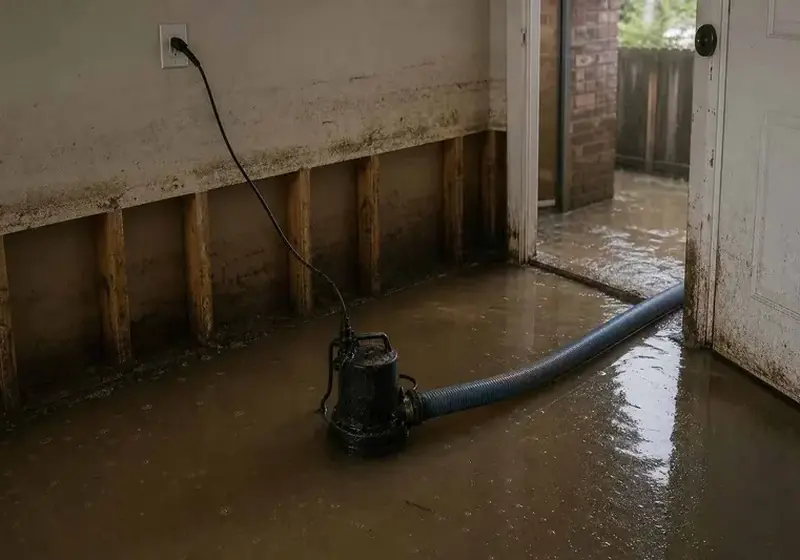
Meters show how high water wicked; the mitigation team cuts drywall above that line, not the whole wall.
- Step 3
Dry the structure
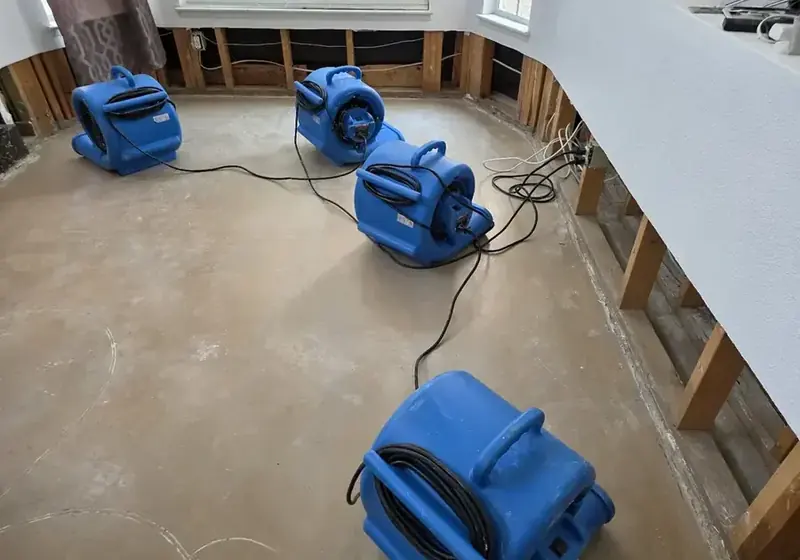
Air movers push air across the framing and slab while LGR dehumidifiers pull the moisture out of the room.
- Step 4
Verify and document
Readings are logged daily and equipment leaves only when framing and slab meet the drying goal.
Why Arvada basements flood
Arvada grew fast from the 1950s through the 1970s, and nearly every ranch and split-level from that era has a full basement. Newer homes in Whisper Creek, Leyden Rock and Candelas finish them from day one. The water that reaches them usually comes from a short list of sources:
- A sump pump that fails during a storm or a spring thaw
- A water heater or supply line in the utility room
- Window wells that fill during a summer downpour and push water through the window frame
- Seepage through cracks where expansive clay has moved the foundation
- A sewer backup through a floor drain
Drying a finished basement without gutting it
Most finished basements do not need to be torn out. The drying team removes wet pad and baseboard, makes flood cuts only as high as the water wicked, and dries the framing and slab in place. Insulation that got wet behind the drywall usually comes out, because it holds water against the studs.
Class 1 through 4 sets how much equipment a room needs. A basement with wet carpet, drywall and a slab is often Class 2 or 3, which means more air movers and a larger dehumidifier than a single wet room upstairs.
Seepage versus a sudden leak
The source matters for the claim. A burst pipe is a sudden and accidental discharge; groundwater seeping through the foundation is treated differently by most policies. The National Flood Insurance Program site explains flood coverage, and the National Weather Service Boulder office posts the storm and flash flood warnings that often come before a basement takes water.
Water damage help across Arvada, CO
The Arvada restoration crew covers every Arvada ZIP from Olde Town and Lake Arbor out to Leyden Rock and Candelas, plus Wheat Ridge, Westminster and Golden next door.
ZIP codes 80001, 80002, 80003, 80004, 80005, 80006 and 80007.
See every Arvada area coveredOther water damage services in Arvada
Basement flooding cleanup questions
Can a finished basement be saved after a flood?
Usually. Wet pad and the lower part of the drywall are removed, and the framing, slab and remaining walls are dried in place. Carpet on a clean-water loss can often be saved; carpet from a sewage or outside flood cannot.
How high do they cut the drywall?
Crews cut above the highest wet reading, which is often 12 to 24 inches above the water line because drywall wicks upward. Meters decide the line, not a fixed height.
What if the water came through the window well?
Window well water is usually rain or snowmelt, so it is treated as Category 2 at least. The crew extracts it, dries the wall below the window and points out if the well drain needs attention.
How long does a flooded basement take to dry?
A contained basement loss typically dries in three to five days once equipment is set. Dense materials, a cold slab or late extraction can stretch that.
Does homeowners insurance cover a flooded basement?
Sudden discharges such as a burst line or a failed water heater are often covered. Seepage, groundwater and surface flooding usually are not, unless you carry flood coverage or an endorsement. Coverage depends on your policy, so it is worth checking with your own insurer.
Should I run fans before the crew gets there?
Moving air helps only after the standing water is out. Fans blowing across standing water mostly push humidity into the rest of the house. Remove what you can from the floor and wait for extraction.
Is there a mold risk in a wet basement?
Mold can start on wet organic materials within 24 to 48 hours, which is why fast extraction and drying matter. Drying the structure to the goal is what prevents it.
Flooded basement in Arvada? Start the pump-out.
The restoration team pumps the water out, opens only what is wet and dries the basement to a verified reading.
(888) 532-8620Get the Arvada basement driedArvada Water Damage Restoration
Arvada, CO and Jefferson County
(888) 532-8620 · open 24/7
Water and sewage losses only
Find us on Google