Water Extraction in Arvada, CO
Standing water keeps soaking into carpet pad, drywall and subfloor until it is pulled out. The extraction crew removes it with truck-mounted pumps, then sets up drying the same visit.
(888) 532-8620Get the water pulled out now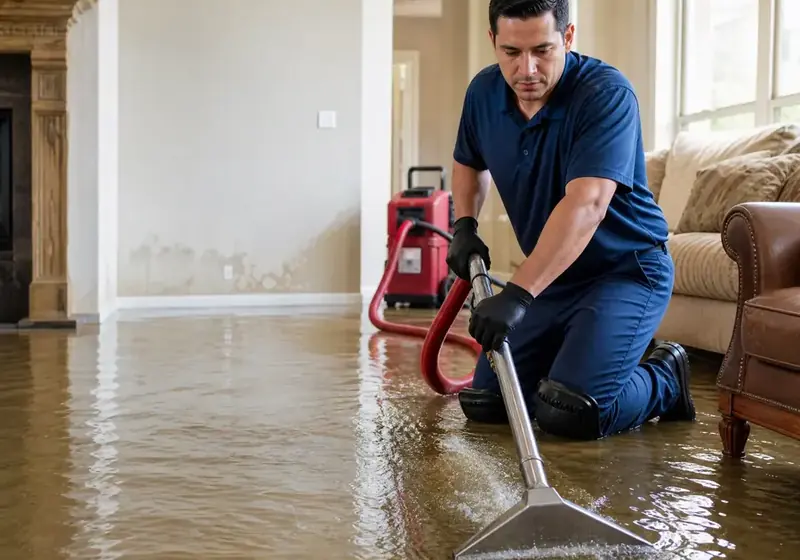
What to do while the water is still standing
- Shut the water off at the main valve if a pipe or fixture is the source.
- Kill power at the breaker for any wet circuit, but only if the panel sits in a dry spot.
- Stay out of standing water near outlets, cords and appliances.
- Photograph the water and the rooms before anything gets moved.
- Lift rugs, cushions and boxes off the floor, then call for extraction.
What does water extraction cost in Arvada, CO?
In Arvada, CO, water extraction on its own typically runs $300 to $1,500, and most jobs combine it with drying for $1,200 to $5,000 in total. The drivers are the water category, the square footage that is wet, the flooring type and how quickly extraction started.
For a closer planning number, run the water damage cost calculator. The restoration contractor who responds prices the job after the walkthrough and the moisture map.
How water extraction is handled in Arvada
- Step 1
Map the wet area
The tech who does the walkthrough reads floors and walls with meters and a thermal camera to find every wet edge.
- Step 2
Extract the standing water
The extraction crew runs truck-mounted suction so the water leaves the building instead of moving to the next room.
- Step 3
Pull the pad, save the carpet
Soaked pad usually comes out; carpet on a clean-water loss is often floated and dried in place.
- Step 4
Set drying and log it
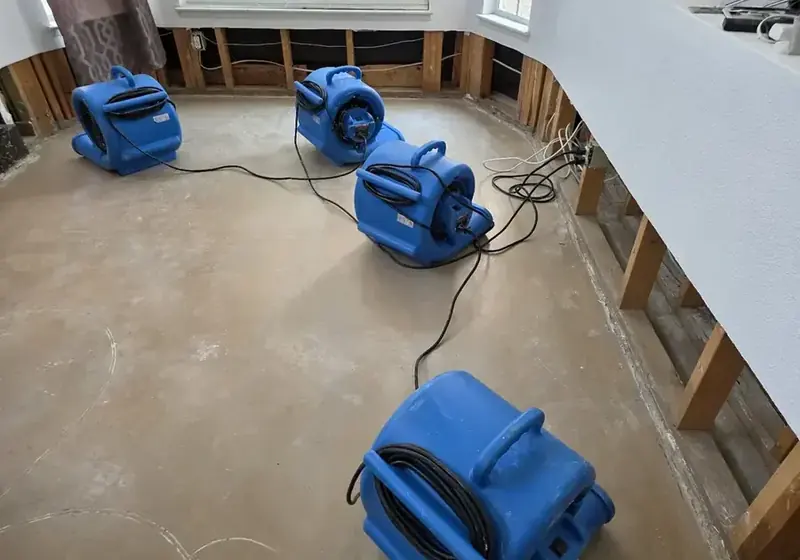
Air movers and LGR dehumidifiers go in, and readings are logged daily until the materials hit the drying goal.
Why fast water extraction matters in Arvada homes
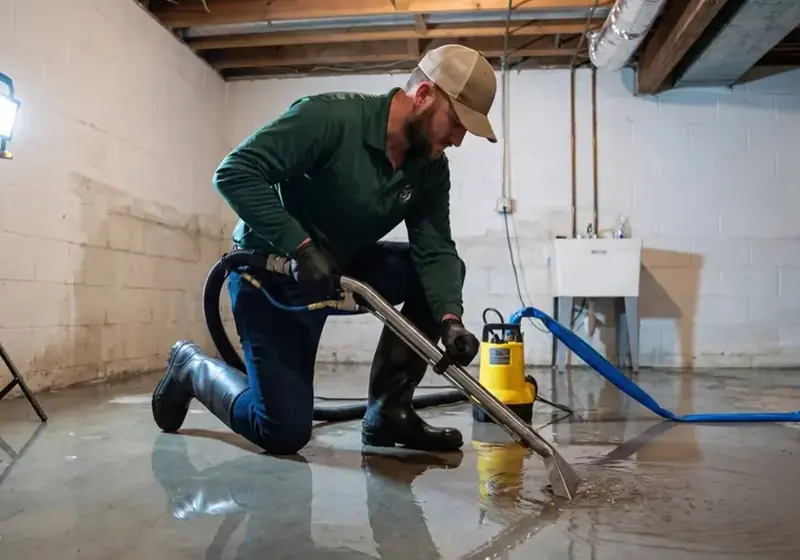
Most Arvada houses built from the 1950s on carry a full basement, and a lot of those basements are finished with carpet, pad and drywall to the slab. Water that reaches that level spreads under the carpet and wicks up the walls within hours. The restoration team treats extraction as the first job on every loss because every gallon left behind adds days of drying and more material that has to come out.
Truck-mounted units matter on larger losses. They pull harder than a shop vacuum, send the water to a tank outside and keep noise and exhaust out of the house. Portable extractors reach upper floors and tight spaces the hoses cannot.
What gets extracted, and what gets removed
- Carpet on a Category 1 loss is usually extracted with a weighted tool and dried in place.
- Carpet pad holds water like a sponge and is often cut out and replaced.
- Hard floors and concrete slabs are squeegeed and extracted, then dried with air movers.
- Porous materials touched by Category 3 water get removed, not dried.
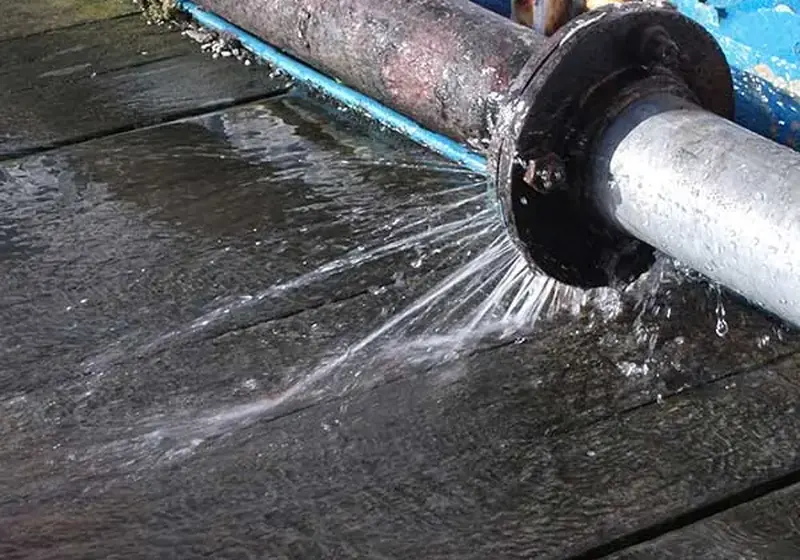
When the source is a burst pipe or a failed water heater, extraction starts the moment the valve is closed. When it is sewage, the crew sets containment first.
After extraction: drying to a number, not a date
Extraction removes the liquid; structural drying removes the moisture left inside framing, subfloor and drywall. Front Range air is dry, which helps, but cool basement slabs slow evaporation, so the drying team relies on readings instead of a calendar. The goal is wet materials within 2 to 4 points of a dry reference in the same house.
For what to do during a flood itself, Ready.gov flood safety covers electrical and contamination hazards, and the EPA page on moisture in the home explains why wet materials need to be dry inside 24 to 48 hours.
Water damage help across Arvada, CO
The Arvada restoration crew covers every Arvada ZIP from Olde Town and Lake Arbor out to Leyden Rock and Candelas, plus Wheat Ridge, Westminster and Golden next door.
ZIP codes 80001, 80002, 80003, 80004, 80005, 80006 and 80007.
See every Arvada area coveredOther water damage services in Arvada
Water extraction questions for Arvada homes
Can I use a shop vacuum instead of professional extraction?
A shop vacuum removes surface water, but it cannot pull water back out of carpet pad or the lower edge of drywall, and it fills in minutes. Truck-mounted extraction moves far more water and leaves materials drier, which shortens the drying phase.
Does wet carpet always have to be thrown out?
No. On a clean-water loss that is extracted quickly, carpet is often dried in place and only the pad is replaced. Carpet soaked by sewage or floodwater from outside is Category 3 and is removed.
How long does extraction take?
Extraction of a single room usually takes under an hour of work. A flooded basement can take several hours. The drying that follows typically runs three to five days for a contained loss.
What if water got under the hardwood?
Hardwood cups as it absorbs water from below. Extraction mats that pull water up through the boards, plus air movers and dehumidifiers, often save it if drying starts early. Readings decide whether it can stay.
Is extraction covered by insurance?
Extraction after a sudden and accidental discharge, such as a burst supply line, is commonly part of a covered water claim. Flooding from rising surface water falls under flood coverage instead. Coverage depends on your policy, so it is worth checking with your own insurer.
Why do they measure moisture before extracting?
Water travels under baseboards and into walls where it cannot be seen. A moisture map shows where the wet edges are so extraction and drying cover the whole area, not only the visible puddle.
Standing water in an Arvada home? Get it out now.
The extraction crew pulls the water, maps the moisture and sets drying equipment the same visit, day or night.
(888) 532-8620Call for emergency water removalArvada Water Damage Restoration
Arvada, CO and Jefferson County
(888) 532-8620 · open 24/7
Water and sewage losses only
Find us on Google