Structural Drying in Arvada, CO
Surfaces dry in a day; framing, subfloor and wall cavities do not. The drying team sets equipment to each room's load and keeps it running until the readings, not the calendar, say dry.
(888) 532-8620Start structural drying now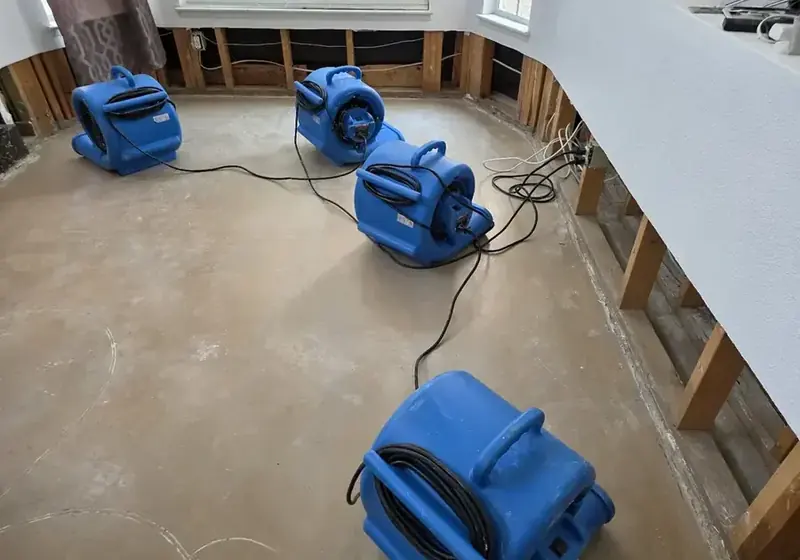
What helps drying before the crew sets up
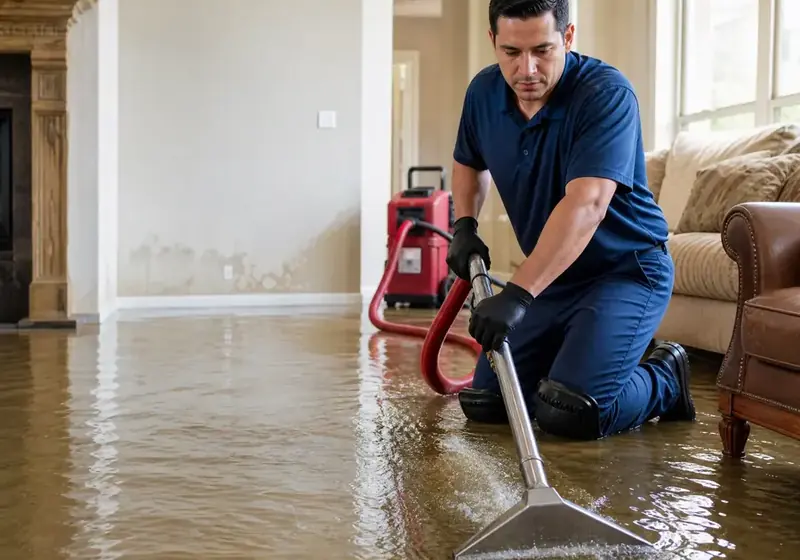
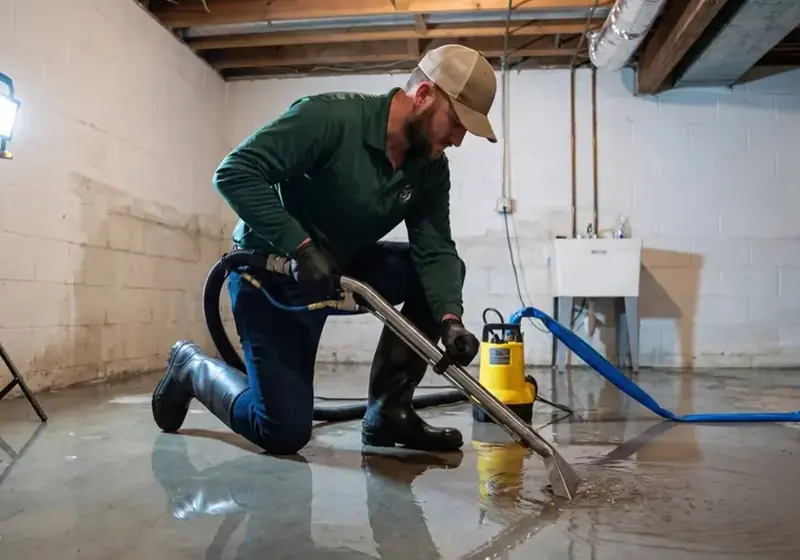
- Get standing water out first; drying does not start until extraction is done.
- Keep the heat on in winter; cold materials give up moisture slowly.
- Move furniture and boxes off wet floors so air can reach them.
- Leave wet cabinet doors and closet doors open.
- Do not paint, patch or reinstall flooring until readings confirm dry.
What does structural drying cost in Arvada, CO?
In Arvada, CO, structural drying typically runs $800 to $5,000, most of it equipment rental by the day plus monitoring. The drivers are the class of loss, the number of rooms, dense materials like hardwood and plaster and how long it takes to reach the goal.
For a closer planning number, run the water damage cost calculator. The restoration contractor who responds prices the job after the walkthrough and the moisture map.
How structural drying is handled in Arvada
- Step 1
Classify the loss
The tech who does the walkthrough sets the category and the Class 1 through 4 rating, which decides the equipment load.
- Step 2
Set the equipment
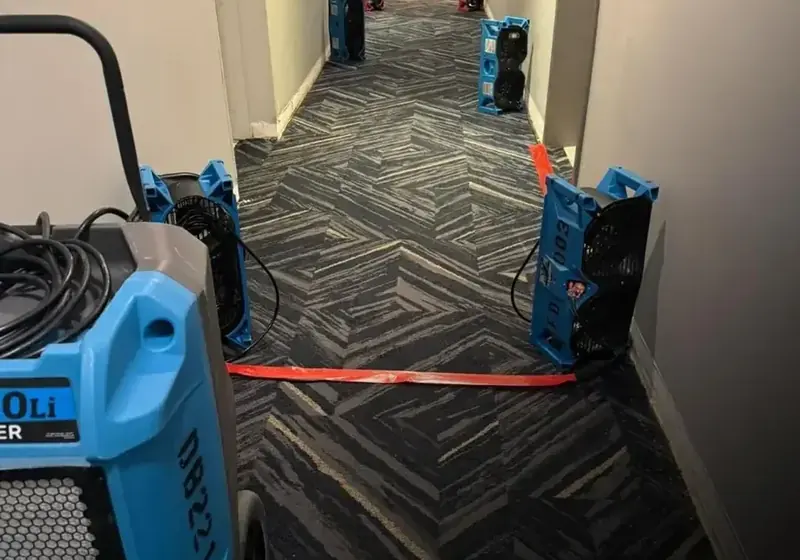
Air movers go in at the room's evaporation load; LGR dehumidifiers or desiccants pull the moisture out of the air.
- Step 3
Log every day
Temperature, humidity and material readings are recorded daily and equipment is moved as areas dry.
- Step 4
Pull on readings
Equipment leaves when materials read within 2 to 4 points of the dry reference, not on a set date.
Structural drying, not just surface drying
Drywall can feel dry to the touch while the bottom plate behind it is still saturated. Structural drying targets what is inside the building: framing, subfloor, wall cavities, the underside of cabinets and the slab. The IICRC S500 standard is the industry reference for how that is done and how dry is measured.
- Class 1: a small area of low-porosity materials
- Class 2: a whole room with carpet and wet walls
- Class 3: water from above, soaked ceilings, walls and floors
- Class 4: dense materials such as hardwood, plaster and concrete that need specialty drying
The equipment and why it is placed where it is
Air movers sweep air across wet surfaces to speed evaporation. LGR (low grain refrigerant) dehumidifiers pull that moisture out of the room air, and desiccant dehumidifiers handle cold spaces and Class 4 materials. Drying mats pull water up through hardwood, and cavity drying systems push dry air into wall cavities through small holes. Thermal imaging and pinless meters show which areas are still wet each day, so equipment moves to where it is needed.
Structural drying follows water extraction on every loss and is the core of basement flooding cleanup and commercial water damage work.
The daily log is the claim file
The drying log records the temperature, relative humidity and grains per pound in each room, plus material readings at marked points, every day. That record is what an adjuster uses to confirm the drying was necessary and complete. The EPA moisture guidance explains the 24 to 48 hour window for drying wet materials, and the USGS Water Science School explains humidity and evaporation in plain terms.
Water damage help across Arvada, CO
The Arvada restoration crew covers every Arvada ZIP from Olde Town and Lake Arbor out to Leyden Rock and Candelas, plus Wheat Ridge, Westminster and Golden next door.
ZIP codes 80001, 80002, 80003, 80004, 80005, 80006 and 80007.
See every Arvada area coveredOther water damage services in Arvada
Structural drying questions
How long does structural drying take?
A contained Class 1 loss usually dries in three to five days. Hardwood, plaster and concrete take longer because the moisture has to move through dense material.
Why can't I just run household fans?
Household fans move air but do not remove moisture from the room, so humidity climbs and drying stalls. Dehumidification is what finishes the job.
Why is the equipment so loud?
Air movers push a lot of air at high speed across wet surfaces. The noise is temporary and drops as units are removed from areas that reach the goal.
Can I turn the equipment off at night?
Turning it off lets humidity climb back and adds days to drying. Leave it running unless the crew says otherwise.
What is a dry reference reading?
It is a moisture reading on the same material in an unaffected part of the home. Wet materials are considered dry when they read within 2 to 4 points of it.
Does drying prevent mold?
Drying wet materials within 24 to 48 hours and confirming them dry by readings is the most effective way to keep mold from starting after a water loss.
Is structural drying covered by insurance?
Drying after a covered water loss is normally part of the claim, and the daily log supports it. Coverage depends on your policy, so it is worth checking with your own insurer.
Still wet inside the walls? Dry the structure.
The drying team sets equipment to each room's load and logs readings every day until the goal is met.
(888) 532-8620Get structural drying startedArvada Water Damage Restoration
Arvada, CO and Jefferson County
(888) 532-8620 · open 24/7
Water and sewage losses only
Find us on Google